Search This Blog

Tuesday, August 10, 2010

A Sagres em San Diego – Uma Visita Que Merecia Mais!

Foi com grande alegria que tivemos conhecimento de que San Diego, tinha sido a comunidade escolhida para receber o N.P.R. Sagres e celebrar o Dia de Portugal, de Camões, das Comunidades e das Forças Armadas em 2010.
Como Português e Imigrante, conhecedor da Comunidade e bem atento ao "modus vivendi" da Comunidade Portuguesa e Luso-Americana do Condado de San Diego e, obviamente, do inteiro Estado da Califórnia, entristeceu-me que os preparativos da visita a San Diego do navio-escola Sagres, além da de Sexa o Embaixador de Portugal em Washington, hajam
resultado em falhas de toda a ordem, especialmente, no tocante ao protocolo que
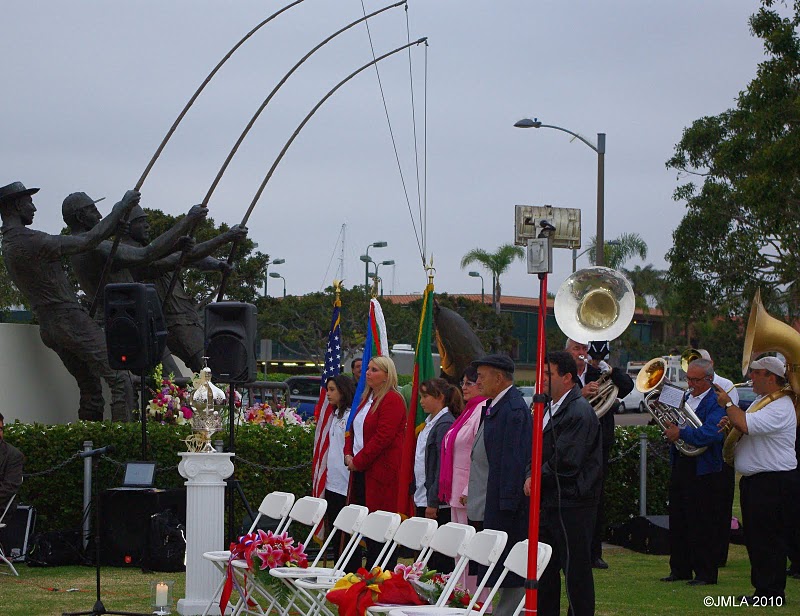
deveria ter pontificado durante as visitas e o qual nunca deveria ter omitido, pelo menos, a cerimónia que se impunha junto ao Monumento a João Rodrigues Cabrillo pelos estreitos laços que existem entre a Armada Portuguesa, o festival multi nacional que comemora a chegada do primeiro europeo ao Oeste Americano, exigem que não se cometam faltas deste nível, além de  melhor elaboradas recepções tanto à chegada como à partidada da Sagres. De nenhum modo, se pode atribuir essas faltas a ignorancia.
Esta não é a primeira vinda da Sagres a San Diego, e o que se fez nas anteriores visitas, muito bem reflete o nível de organização possível, se entregue a pessoas com a devida competencia na comunidade.
No entanto, não foi tudo negativo, a presença da Sagres no porto de San Diego, não podia melhor representar Portugal, e a recepção abordo da Sagres, foi como sempre, um serão inesquecível. Adicionalmente, a presença do Embaixador de Portugal em Washington, contribui para que o Dia de Portugal 2010 em San Diego, jamais seja esquecido.

José Maurício Lomelino Alves
Comendador, Ordem do Mérito
Presidente Emérito – Portuguese Historical Center
Ex Presidente – Cabrillo Festival, Inc.
Vista, Califórnia - 2010

The Sagres in San Diego – A Visit That Deserved More!
It was with great jubilation that we learned that San Diego had been the community chosen to receive the N.P.R. Sagres and to celebrate the Day of Portugal, Camôes, of of the Communities and of the Armed Forces in 2010.
As a Portuguese and an Immigrant, versed on the Community and well aware of the “modus vivendi” of the Portuguese Community and Luso-American in San Diego County and obviously of the entire State of California, I was deeply saddened with the level of preparation for the visit of the Sagres and of the Ambassador of Portugal in Washington. The results were evident by the many failures, especially, as it referredddd to protocol that should have been exercised during the visit, and which in the minimum should have included a ceremony at the Monument to João Rodrigues Cabrillo, due to the strong ties that exist between the Portuguese Navy and the multi-national festival that commemorates the arrival of the first European in what is now the West Coast of the United States. Failures of this caliber are not acceptable, nor can the lack of welcoming and sending off ceremonies for the Sagres, be blamed on ignorance.
This is not the first trip of the Sagres to San Diego. Past visits were well defined by the level of organization that is possible, if such an event is coordinated by competent persons in the community.
However, not all was negative, as the presence of the Sagres in the Port of San Diego, could not have better represented Portugal, and the reception on board of the Sagres, was as always, an unforgettable evening . Additionally, the presence of the Ambassador of Portugal, contributed to the fact that the Day of Portugal 2010 in San Diego, will never be forgotten.

José Maurício Lomelino Alves
Order of Merit – Grade of Commander (Portugal)
President Emeritus – Portuguese Historical Center
Past President Cabrillo Festival
Vista, California - 2010

Sunday, July 25, 2010

Os 4 Coriscos / The 4 Coriscos


The 4 Coriscos - José do Couto Rodrigues, António S. Bettencourt, Emanuel Lopes, José Maurício Lomelino Alves at the opening ceremonies of the IV International Conference on the Holy Spirit, S.E.S. Corporations, Santa Clara, CA - June 23, 2010
Os 4 Coriscos - José do Couto Rodrigues, António S. Bettencourt, Emanuel Lopes, José Maurício Lomelino Alves nas cerimónias de abertura da IV Conferencia Internacional Sobre o Expírito Santo, S.E.S. Corporation, Santa Clara, Califórnia, 23 de Junho de 2010.

O MICAELENCE, POR ADMINICULO, REVELA DESDE A FALA AO TOM BOSSELADO DAS FEICOES UMA PREOCUPACAO DE INSULANISMO ESTREMA , TAO RIJA E CALADA QUE O ASSINALA EM
TODA A PARTE COMO ALGUEM QUE E ALGUEM


De ( O Açoreano e os Açores ) Vitorino Nemésio, Porto 1929
Emanuel e Fátima Lopes

7 Maravilhas de Portugal

As 7 Maravilhas de Portugal estão em voto. Convidos-vos a que acessem o link para visualizar e votar. Os embaixadores são a fadista Mariza e o atleta, Pedro Pauleta, votado o melhor jogador de sempre do Paris Saint Germain e um dos componentes da selecção portuguesa em 2006.
A seguir insiro um trabalho de Edmundo Macedo, Grande Amigo e Consul Honorário de Portugal em Los Angeles. Este trabalho foi escrito logo após o Mundial 2006, e bem representa o espírito de Pauleta que conjuntamente com Mariza, se podem incluir como duas mais Maravilhas de Portugal.

EM DEFESA DO PEDRO PAULETA, SEM PROCURAÇÃO 
Por: Edmundo Macedo
Não tenho procuração do Pedro Pauleta, nunca falei nem nunca tomei o pequeno-almoço com ele e as únicas vezes que o vi foi sempre pela televisão. Não sei se ele é pessoa com quem se possa conversar ou se é do tipo sisudo, fechando-se em copas e preferindo dizer pouco ou até estar calado   -- que por sinal é o que muito boa gente devia fazer de forma a evitar que entre mosca ou saia asneira. 
Verdadeiramente o que sei sobre o Pauleta é que se trata de um futebolista português de eleição, que já anunciou   -- e foi pena --  a sua retirada da selecção das cinco quinas ao serviço da qual se sagrou como o melhor marcador e que nos últimos anos tem representado uma equipa francesa de primeiríssimo plano e deixado pelos relvados mundiais uma imagem sob todos os aspectos  --  e numa só palavra --  admirável!  
Ainda por aquilo que julgo haver extraído dos écrans de televisão o Pauleta  exibe uma figura escorreita, traços inequívocos de pessoa que traz os pés bem assentes no chão, além de um ar de alegria misturada com uma ponta de tristeza   -- pois parece exuberante hoje, moderada amanhã --,  que é nuance que não deve interpretar-se como um alto e baixo de alguém, mas tão sim como uma característica pessoal que confere ao Pedro uma nota de desejável equilíbrio perante um mundo em que nem tudo são rosas e que nos últimos tempos, quase diariamente, parece andar doido varrido.
O valioso internacional açoriano, esguio, seco de carnes, sem um grama de banha a mais, protótipo do puro avançado-goleador   -- tão avançado-goleador que se fosse fadista seria Marceneiro, se fosse toureiro seria Manolete, se não soubesse o que fazer ao dinheiro seria Hilton, ou Onassis, ou Rockefeller, ou os três juntos  --,   representou-nos muito bem, repito, representou-nos muito bem no último Mundial na Alemanha, mas feita a "autópsia" às vísceras de algumas críticas na imprensa desportiva apurou-se que o Pedro não conseguiu esquivar-se a um intenso "bombardeio" assente no lusitaníssimo falar por falar e na nossa secular predilecção por tudo quanto seja a favor do contra, que é o mesmo que dizer o nosso desdém por tudo quanto seja contra o contra   -- um factor sintomático de que há torpor e sono em certos quadrantes ligados à função informativa, que por tão letárgico como parece deve ter sido causado pela mosca tsé-tsé.
Na verdade, após o último Mundial certa imprensa "descascou" no Pauleta à grande e à francesa, elegendo-o como bombo da festa e caricaturizando-o como um zé-ninguém, condenando-o como o jogador que na Alemanha esteve em campo a ver passar os combóios e ridicularizando-o como o pobre diabo que ficou especado lá em baixo e nunca foi lá acima, fugindo da bola como se a bola queimasse, tivesse aguilhões ou mordesse. 
Sentenciando-o como quem esteve em campo e não jogou!
Só não o "enforcando" por falta de corda e árvore!
Só não o "fuzilando" por falta de balas, lenço branco para os olhos e estaca!
Só não o "comendo vivo" por falta de dentes ou de dentadura postiça!
Só não o excomungando por falta de sacerdote!
É óbvio que nesse tipo de análises  -- que não passam de exercícios ensaiados em preguiça e em desabono da massa cinzenta  --  não se respeitou o honestíssimo trabalho do Pedro Pauleta ao serviço da selecção nacional e fez-se vista grossa ao facto da crítica ser fácil e a arte difícil. 
Apesar de tudo a caravana atravessou e resistiu ao escaldante deserto, descansou no oásis e deliciou-se com as preciosas tâmaras. 
E houve tempo para dessedentar Tuaregues e camelos …  
E o Pauleta sobreviveu! 
Na minha opinião foi o oportuníssimo Pedro Pauleta quem abriu o trinco do labiríntico caminho que compreensivelmente nos intranquilizava ao iniciar-se o Mundial, marcando o nosso primeiro golo contra Angola num abrir e fechar d'olhos. Um golo de levantar estádios e de acariciar corações lusitanos, não obstante a simplicidade do lance que ele tão bem soube concluir e que Luís Figo  -- outro "grande senhor"! --  concebeu, colando o esférico às botas com argamassa, deixando três ou quatro adversários "cravados" à relva com cavilhas d'aço e oferecendo o esférico ao Pedro numa bandeja de platina enfeitada com rubis e esmeraldas.
Decorriam apenas quatro minutos desse jogo-chave, que em teoria sempre parecera aos "adivinhos" portugueses uma simples formalidade e que, contrariamente, acabaria por revelar ao mundo uma representação angolana muito apta, muito talentosa e amplamente digna de representar o seu país na Alemanha.
Um golo decisivo apontado em jogo crucial e que colocou a selecção lusitana na senda da glória. 
Que voltou a fugir-nos por um triz!
A utilidade de Pauleta,  autor de um só golo   --  que é factor irrelevante numa apreciação desapaixonada ao seu contributo global uma vez que entre os portugueses, em jogo corrido, apenas Maniche marcou mais um golo do que ele  --,  é incontroversa e deverá aferir-se tendo em conta que a sua posição, ou a estratégia da sua colocação em campo, sempre em cunha no reduto adversário, metido na zona do grande risco como ameaçador "punhal" apontado ao flanco das defesas "inimigas"     (terá sido por escolha própria ou por exigência de Scolari?),   não permitiu que estas participassem em manobras ofensivas    -- dada a pesada incumbência de terem de vigiá-lo como sentinelas em tempo de conflito --   pelo que as manietou, isolou, dissecou, partiu pela "coluna vertebral", impediu de participar com o meio-campo e o ataque. 
Dizer que Pauleta não rendeu   -- que é o que mais se tem lido e ouvido por aí --  é o mesmo que dizer que o colibri não gosta de mel, o papa-figos não debica nos figos, o pica-pau não declarou guerra total e eterna ao pau.

Wednesday, July 14, 2010

Five Wounds Portuguese National Church -Igreja Nacional Portuguesa das Cinco Chagas

The Five Wounds Portuguese National Church is the heart and soul of the Portuguese Community in Santa Clara Valley. The Five Wounds Parish was dedicated by Father Henrique Ribeiro on November 8, 1914. The hard work and dedication of many Portuguese families made this beautiful edifice possible. The story of the construction of Five Wounds is a testament to the spirit of the Portuguese people. After the local Panama-Pacific Exposition closed in San Francisco at the end of 1915, a group of community leaders asked to use the timbers and wood from the Portuguese Pavilion to help build the Five Wounds Church. With wagons and fanfare they brought back from San Francisco down the El Camino Real the building materials for Five Wounds Church. They were met and celebrated in the many Portuguese communities along the way. The cornerstone of the church was laid October 1, 1916, and the completed building was consecrated on July 13, 1919. From that wonderful beginning grew the strong support for the Five Wounds Portuguese National Church.
The building is of Manueline style and has been a source of identity and pride for the over eight hundred thousand Portuguese-speaking people who live in California. Five Wounds has been declared by the City of San Jose a historical landmark of general interest to the entire community.
Since the founding of Five Wounds Church, many fine clergymen have served the Portuguese community. Five Wounds Church offers a variety of charitable, religious, and socio-cultural services as well as operating the Five Wounds School. The church is open daily from 9:00 A.M. until 11:00 A.M. and all day Saturdays and Sundays. All are welcome.
Information courtesy of the Portuguese Chamber of Commerce of California
Additional historical information will be available on the upcoming publication, “Power of the Spirit” Edited by Portuguese Heritage Publications of California.
This collection of photographs, was taken during the recently held IV International Conference on the Holy Spirit, held June 24-27, in San Jose.

A Igreja Nacional Portuguesa das Cinco Chagas é o coração e a alma da comunidade portuguesa no Vale de Santa Clara. A paróquia das Cinco Chagas foi dedicada por Padre Henrique Ribeiro no dia 8 de Novembro de 1914. O trabalho duro e a dedicação de muitas famílias portuguesas fizeram este bonito edifício possível. A história da construcção das Cinco Chagas é uma testemunha do espírito do povo português. Após a local Exposição Panamá-Pacífico fechou-se em São Francisco no fim de 1915, um grupo de portuguêses pediram para usar as madeiras do Pavilhão Português para ajudar a construir a Igreja das Cinco Chagas. Com vagões e celebração caminharam de São Francisco trazendo os materiais do edifício para o sítio da nova igreja. Foram encontrados e comemorados em muitas comunidades portuguesas ao longo da viagem. A primeira pedra da igreja foi colocada no dia 1 de Outubro de 1916, e o edifício foi consagrado no dia 13 de Julho de 1919. Daquele dia em diante cresceu o apoio da paróquia da Igreja Nacional Portuguesa das Cinco Chagas.
O edifício é do estilo Manuelino e foi uma fonte de identidade e o orgulho para os oitocentos mil portuguêses que vivem na Califórnia. As Cinco Chagas foi declarada, pela cidade de São José, um sítio histórico de interesse geral à comunidade.
Desde a fundação das Cinco Chagas, diversos clérigos serviram à comunidade portuguesa. A Igreja das Cinco Chagas oferece uma variedade de serviços de caridade, religiosos, e sócio-culturais e tambem mantem a escola das Cinco Chagas. A igreja é aberta durante a semana das 9:00 até as 11:00, e todo o dia nos Sábados e Domingos. Todos são bem-vindos.
Informação cortesia da Câmara de Comércio Portuguesa da Califórnia
Informação histórica adicional estará patente no próximo trabalho que será editado pela Portuguese Heritage Publications of California, entitulado “Power of the Spirit”
Esta colectânea de fotografias, foi tirada durante a recente IV Conferencia Internacional Sobre o Espírito Santo, realizado em San José, California entre 24 e 27 de Junho passado.

Monday, June 28, 2010

An Exhibition of California Portuguese Artists - Exposição de Artistas Portugueses da California

On June 26 and 27, 2010 at the Five Wounds Portuguese National Parish School, San Jose, California, and as part of the IV International Conference on the Holy Spirit, an Exhibit of California Portuguese Artists, was held.
Promoted by the the Portuguese Community of California and Direcção Regional das Comunidades, Açores, in cooperation with the Portuguese Athletic Club and sponsored by BANIF-Açores, Inc/California, the excellent exhibit was enjoyed by all that attended.
The largest collection of crowns, dresses and capes associated with the Feast of the Holy Spirit ever assembled, depicts with great taste, the variety of designs and beauty, from simplest to the most extravagant.
The exhibit included the earliest crown used in 1871, in Half Moon Bay, with its simple, yet beautiful design, to the gold crown, especially commissioned for the Centennial Festa in San Diego in 2010.
A complementing part of the exhibit, was the collection of dresses and capes, used by the queens at the various “Festas”. The variety of these covered a wide range, as did the crowns, and displayed the simplicity of the early capes as well as the complexity, beauty and choice of silk for the Centennial Festa cape from San Diego.
It was also an occasion for Portuguese California Artists to display their various styles of paintings and glass works as well as jewelry.
Congratulations to the exhibit coordinator, Maxine Olson and to the Committee. Wonderful!
Congratulations to the conference organizers, José do Couto Rodrigues and Tony Goulart for an exceptional job.

Nos dias 26 e 27 de Junho, 2010 na Escola Paroquial da Igreja Nacional das Cinco Chagas, e em conjunção com a IV Conferencia Internacional Sobre o Espírito Santo, realizou-se uma exposição de Artistas Portugueses da Califórnia.
Com promoção por parte da Comunidade Portuguesa em California e Direcção Regional das Comunidades, Açores, em cooperação com o Portuguese Athletic Club e apoio financeiro do BANIF-Açores, Inc/California, a excelente exposição foi do enorme agrado dos visitantes.
A maior colecção de corôas sobre o Espírito Santo jamais patente, demonstrava a grande variedade de desenho e beleza, do mais simples ao mais estravagante.
A exposição incluiu desde a primeira corôa usada em 1871 em Half Moon Bay, California, de grande singeleza e beleza, até à corôa em ouro, consignada para o Centenário da Festa em San Diego, em 2010.
A complementar a exposição, estava patente também uma colecção de vestidos e capas usadas pelas rainhas de várias Festas. Em grande variedade, exemplificam, como as corôas, a simplicidade das primeiras capas, assim como a complexidade de confecção, beleza das fazendas, incluindo a de seda, mandada fazer especialmente para a Festa centenária em S. Diego.
Foi também a ocasião para os Artistas Portugueses da Califórnia de exibir vários estilos de pintura, trablhos em vidro e jóias.
Parabens à coordenadora da exposição, Maxine Olson e ao seu comité. Excelente!
De igual modo vão parabens para os organizadores da conferencia, José do Couto Rodrigues e Tony Goulart, por um trabalho excepcional.


Monday, June 7, 2010

Já Chegou! It's Here!

A Sagres, chegou hoje pelas 9:00 horas a San Diego. Nesta manhã cinzenta de Junho, como um fatasma, surgiu da bruma, a linda silueta das velas alçadas com a Cruz de Cristo do Navio Escola Sagres, que na sua viagem de circumnavegão, parou em San Diego para celebrar o dia 10 de Junho, Dia de Portugal, de Camões, das Comunidades e das Forças Armadas.
É sempre imponente e emocionante ver a bandeira Portuguesa que na Sagres tão bem representa Portugal.
A Sagres está atracada ao lado do San Diego Maritime Museum, na bela baia de San Diego.
The tall ship, Sagres, arrived today at 9:00 AM. On this grey morning, as if it were a ghost in the morning mist, the silhouette of the full sails, bearing Christ' Cross of the Sagres, became more and more visible, as the Sagres, in its circumnavigation trip, stopped in San Diego to celebrate the 10th of June, Day of Portugal,Camões, of the Communities and of the Armed Forces.
It is always impressive and causes much emotion, to see the Portuguese flag, fly from Sagres' mast, so well representing Portugal.
The Sagres is moored next to the San Diego Maritime Museum, on beautiful San Diego bay.

Fotos e texto / fotos and text: ©José M. L. Alves
View in HD1080p


Sunday, May 30, 2010

Portuguese American / Canadian American Online Survey

I strongly suggest that the readers review this survey. It dispels many myths traditionally accepted. Although it maybe somewhat compromised by the  those filling the survey, it gives an interesting cross section, and probably the most up to date review of both the Portuguese American and Canadian American Diáspora.
Well worth reading!

José M. L. Alves
Vista, CA

www.christiancollegefaculty.com/anderson/DulceScottSurveyResultsOne.pdf

ONLINE SURVEY SHOWS THAT THE DESCENDENTS OF PORTUGUESE IMMIGRANTS, WHO TOOK THE SURVEY, HAVE ACHIEVED A HIGH LEVEL OF INTEGRATION INTO AMERICAN AND CANADIAN SOCIETIES, WHILE REMAINING COMMITTED TO THEIR ETHNIC IDENTITY AND CULTURE, THE LUSO COMMUNTITIES, AND PORTUGAL

Dulce Maria Scott, Ph.D.

Anderson University

May 23, 2010

Wednesday, May 26, 2010

Radio Amália - Rádio Online

Amália Rádio Online Listen to the best Portuguese music online directly from Lisbon. Just click on highlighted Radio Online.
Enjoy!
Para o melhor em música portuguesa na net directamente de Lisboa, clique em Radio Online. Disfrute!

Monday, May 24, 2010

Dr. Alcino Silva - Grand Officer of the Order of Prince Henry the Navigator

During the Centennial Festa do Espírito Santo in San Diego, Dr. Antonio Braga, Secretary of State for Portuguese Communities, on behalf of the President of the Republic of Portugal, awarded Dr. Alcino Silva, Professor of the Departments of Neurobiology, Psychiatry and Psychology at the University of California, Los Angeles the tittle of Grand Officer of the Order of Prince Henry the Navigator.
Dr. Silva was recognized for his outstanding work on molecular and cellular cognition. Dr. Silva's lab is focused on deriving explanations of cognitive processes that integrate molecular, cellular and behavioural mechanisms and to find treatments for cognitive disorders. His team recently showed that is possible to reverse conditions associated with neurofibromatosis type 1 (NF1) and tuberous sclerosis, two of the most common genetic disorders that cause learning disabilities and is located at UCLA.
He was born in Portugal, went to Angola, Africa at three years of age and returned to Portugal at the age of 12. After completing his studies, and due to the difficult after the 1974 revolution, he came to the United States to continue his studies and establish himself as a world renown scientist and researcher.
Congratulations to Dr. Silva on his career achievements and for the award bestowed upon him by Portugal.

José M. L. Alves
Vista, CA

Sunday, May 23, 2010

Centennial Festa do Espírito Santo - San Diego, California

Today, San Diego's Portuguese Community celebrated the 100th anniversary of the Festa do Divino Espírito Santo.
A religious tradition brought by the early immigrants from the Azores, it is now San Diego's oldest ethnic religious festival.
The centennial parade was comprised of more than nine hundred children, several floats, visiting queens and bands, past Festa presidents and queens. It included varied dignitaries, including San Diego's Mayor and local Councilmen, as well as the Mayor of the town of São Roque, Pico, Azores, the Secretary for Portuguese Communities from Lisbon and the Consuls of Portugal from Los Angeles and San Francisco.
It is estimated that around 8,000 persons viewed the parade. A high mass was held culminating with the crowning of the Festa Queen and King.
When the parade re- formed and returned to the United Portuguese S.E.S. Hall, “Sopas” were served to members of the community, the dignitaries and Queen and King, the Festa, President and Family.
During the day, “Sopas” were served to some 5,000 persons both, inside the main hall and in a tent purposely erected for the event.
During the main serving, Michael Feliciano, in whose memory the “Festa” was held, was remembered.
During the day the bazaar, “Arraial” was open, where all enjoyed games, the foods of Portugal, as well as watching folkloric groups from various Portuguese Communities in California and listening to music of Portuguese marching bands from other communities.
Evelyn da Rosa Feliciano, her Family and the hundred of volunteers that help put on the event are to be congratulated for a job well done with a lot of love and class.

José M. L. Alves

Tuesday, May 18, 2010

One Hundred Years of Tradition


Festa do Espírito Santo – San Diego

Sunday, May 16th was the beginning of activities for the 100th celebrations of the Festa do Espírito Santo in Point Loma, San Diego.
Evelyn Feliciano, President of the Centennial Festa, had the brilliant idea of starting the activities at the the Tunaman's Memorial on Shelter Island. It was a simple ceremony, “honoring those that built an industry, and remembering those that departed this harbor in the sun and did not return”.Antony Mascarenhas.
Some six hundred people attended. Especially wonderful,was seeing the number of families with their children, a sign that the “Festa” is alive and well as well as the members of the community that have made the “Festa” such a special happening.
The event was started with the playing of the national anthems of Portugal and the United States, followed by the Alva Pomba, by the Filármonica União Portuguesa of San Diego.
Evelyn spoke of the significance of the event, followed by the Rosary, with Father Mel Collier. Participants included the Festa Queen and her Court.
To finalize the event, a pyrotechnic show exploded over the San Diego Bay with coordinated music. This was a great throw back, when fireworks were a part of “Festa” activities.
Congratulations to the Feliciano Family on a great start to what will be to be a memorable 100th anniversary of the "Festa do Espírito Santo".

Click on photos to enlarge


Saturday, May 15, 2010

Reunião de Antigos Alunos dos Liceus, Colégios e Escolas Industriais dos Açores


Desloquei-me propositadamente a San José, no passado sábado dia 8 de Maio para assistir ao encontro de antigos alunos dos liceus, colégios e escolas industriais dos Açores. Foi um serão bastante agradável, onde fui encontrar várias pessoas com quem já não contactava à muitos anos.
Apesar de não lá encontrar colegas dos meus anos no Liceu de Ponta Delgada, tive ocasião de reactar amizades com alguns alunos mais antigos e mais recentes do Liceu.
Na sua totalidade, assistiram ao serão cerca de 200 pessoas, representando os três distritos. Durante o jantar, seguido por música e baile, houviram-se e trocaram-se histórias por toda a sala.Foi uma noite de “é pá, tu tás óptimo”, de “ lembras-te de...?”, e de “o que é feito de...?”
Muitos abraços, muito relembrar, enfim, uma serão bem passado.

J. M. Lomelino Alves
Vista, Califórnia

Clique na foto para ampliar


Saturday, April 17, 2010

Immigrants By Chance - Chapter 2

The Last Goodbyes

Before leaving São Miguel to America, there were the inevitable last minute preparations and good byes. My parents were very specific as to the family members and friends they needed to say goodbye to. This consumed quite a bit of the last weeks on the island. However, the last day was quite interesting since, my father had certain people that he had left for last. I don't specifically remember who they were, however, I remember that they were in Ribeira Grande.
For this trip from Ponta Delgada to Ribeira Grande and back, he used my grandfather's car, a 1927 Mathis. The car had been in the family since it had been purchased by my grandmother's brother, João, in 1927 on a trip to France. Interesting enough, the car's license plate was AR 19-27. Upon his brother in law's death, my grandfather purchased it, and it became Alves' family car, used by the whole family.
My father was the first of sons to learn how to drive, followed by my uncles, Francisco and José, and later my aunts Maria do Carmo and Maria José. The girls learning how to drive, was a novelty, since they were some of the first women to drive in Ponta Delgada. My grandfather also learned how to drive, however, I don't remember ever seeing him do so. There were five children who drove and therefore, no need for him to do so.
The car was a jet black four door convertible, right hand drive that sat 5 adults. It had running boards and a 10 HP engine. A box bolted on to the frame, with the spare attached to it, was the trunk. The windshield wiper was hand squeegee, operated from the inside. The car was a four door convertible. I never saw the top down. When I asked, why the top was never put down, I was told that putting the top down and back up, caused too much damage, and tops were not easily available.
The engine was the essence of simplicity, with a carburetor that easily clogged. By removing the top, which had a simple screw, removing the filter and blowing on it, it usually started again, without too much effort.
The wheels on this car, were a problem. They were solid and with the years had a tendency to rust around the lug nuts, and to shear off.
1927 Mathis in Calhetas - My grandfather, José Inácio Alves, my father, Gil Alves,
my grandmother, Catarina Pimentel Alves and my aunt Maria do Carmo Alves (Vieira dos Santos)

On this last day of good byes, I accompanied my father on this trip to Ribeira Grande. This was done on the narrow cobblestone road, lined with large trees, some large homes, corn and wheat fields, fruit farms and just prior to reaching Ribeira Grande, the airport.
The airport at Sant'ana was pasture land, reclaimed during WWII to create a runway for war planes that had been stationed on São Miguel. It later became the home of the newly created SATA airline. With the frequency of the flights being very sparse, cows were used as natural lawn mowers. At times, the plane would have to circle overhead , while the cows were rounded up and the plane could land. The airport was known as Aerovacas de Sant'ana.
On the return to Ponta Delgada, as we approached the area where the new soccer stadium is now, we had a flat. My dad replaced it with the spare, and we were on our way. He had not driven more than a kilometer, when the right front wheel, sheared off. With no spare to replace it, the next best thing was to wait for someone to give us a ride to Ponta Delgada and have the wheel with the flat fixed and return to replace the sheared wheel. Remembering that this was 1957, and there were not that many vehicles on the roads, the first sign of help was a garbage truck. The truck stopped, my father explained the situation, we hopped on with the wheel, and we were on our way to the repair shop.
Once the tire had been repaired, it was back to the car, by taxi, replaced the wheel, and it was on, to leave the car at my grandfather's home, and walk home. The event amounted to about a three fiasco.
One of the things that my parents had done was to say goodbyes, but always keeping from telling friend and family friends, the exact date of the departure. However, in those days, the ships arrivals and departures were printed in the daily newspapers. And so, the secret was out, since there were not that many ships that made the trip, from Ponta Delgada to New York. The only family members that were kept completely in the dark, were my mother's aunts, Arsénia and Mariquinhas, with whom we lived. It was very difficult for my mother to say goodbye because of their advanced ages. After all, they were the one's that had received my mother, when she first arrived in the Azores as a young woman.
On May 9th, 1957, we were rushed to the dock, where the ship, Monte Brasil had finished loading. It was a cool, dark night. On the dock were my grandfather, my grandmother, my father's brothers and sisters who lived in the island, and few members of my mother's side of the family.
It was the last time for hugs, kisses, tears, best wishes and the final opportunity to question whether, my parents had made the right decision.
At about 10 o'clock, we boarded and shortly thereafter, the ship set sail to Terceira, Faial and on to New York.

José Maurício Lomelino Alves
Vista, California
© JMLA 2010

Friday, April 9, 2010

Coimbra 1967 - An Unique Opportunity to Experience Portugual


Click on the photo to enlarge / Clique na foto para ampliar


In 1967, I had an opportunity to return to the Azores to visit my family for the first time since immigrating to California in 1957. After spending about two weeks in São Miguel, seeing the family and reliving old memories, I went on to Lisbon to see other family members and go on to Coimbra to attend an intensive course on Portuguese history, language and culture.
I believe I was the second student to come from California, having been preceded by Antonio Andrade, a family friend who became a high school teacher in San Jose.


The program was designed for international and Portuguese American students from the diaspora who are fluent, or at least somewhat versed in the language. The course was held at the Faculty of Letters at the University of Coimbra, founded by King D. Diniz in 1290.
It is one of the oldest universities in continuous operation in Europe and the world, the oldest university of Portugal, and one of its largest higher education and research institutions. It is organized into eight different faculties according to a wide range of fields, granting all the highest academic degrees in architecture, education, engineering, humanities, law, mathematics, medicine, natural sciences, psychology, social sciences and sports.1
On the weekends, we had an opportunity to visit various tourist and cultural sites. This gave the students from the many countries, an opportunity to interact in a non formal setting.
Our day included classes from 9:00 AM to 3:00 PM. The morning usually started at the faculty snack bar, with a typical breakfast of a galão (latté) and a papo seco com fiambre e queijo ( roll with ham and cheese) or a sweet roll. For those with a hang over from the previous nights activities, a beer was usually the norm, replacing the galão. Yes, the university snack bar serves beer!
 In the cloister at the entrance to the library
During the summer course, I lived with a cousin, Carmen Reis, who lived on Bairro Silva Rosas.
There is an interesting tradition at Coimbra, that allows all students to be called by the tittle of "Senhor Doutor". One afternoon,while having lunch at a nearby café, an older women came in and saluted me by saying, "Bom dia senhor doutor", to which I replied, that I was not a permanent student and that I need not be called by the tittle. The women looked at me perplexed and said, "então passe bem senhor doutor" ( have a good day doctor). As the old saying goes, you can lead them to water, but you cannot make them drink.
My two weeks at Coimbra, gave me an opportunity to meet students from varied countries, including, Brazil, Catalonia, Netherlands, Germany, England and Ireland.
 It was truly a wonderful experience. The program continues to this day, and we encourage students at the college level, to apply and enjoy this once in a life time experience.
1.http://en.wikipedia.org/wiki/University_of_Coimbra

Conimbriga's archeological site from Roman times


Picnic near Conimbriga's archeological site.

Saturday, March 6, 2010

U.P.S.E.S. Celebrates 100th Festa


San Diego's U.P.S.E.S - Portuguese Hall, will celebrate its 100th Festa do Espírito Santo, the week of May 16-23.  Under the presidency of Evelyn da Rosa Feliciano and  Family, the 2010 Festa promises to be a memorable one. Please contact the web site to check on Festa activities.

http://www.upses.com

Wednesday, February 10, 2010

IV INTERNATIONAL CONFERENCE ON THE HOLY SPIRIT

California has been and still is the one place in the world where the devotion to the Holy Ghost has experienced its largest expansion.The devotion and celebration in honor of the Holy Spirit is the largest, most visible and important religious and cultural manifestation of the Portuguese in California. For over 150 years, starting with the early shore whalers, the Portuguese have celebrated the Festa ao Divino Espirito Santo. Through good and bad times, in war and in peace, the Portuguese community of California has never forsaken these yearly celebrations to the Holy Spirit. This year, in almost 100 locations, more than a quarter million people — officers, queens, members, volunteers, donors and guests — will experience the sharing and family atmosphere of these unique celebrations brought over by our pioneers from the Azores.

A Califórnia foi e é o local privilegiado onde a tradição, o culto e a devoção ao Divino Espírito Santo, trazida pelos emigrantes dos Açores, teve a sua maior divulgação e expansão no mundo, tornando-se assim a nota cultural mais marcante deste povo na sua terra de adopção.
Depois de se ter realizado duas vezes no Brasil, esta Conferência bienal teve lugar há dois anos na ilha Terceira, Açores. Estes encontros têm como propósitos: 1. aprofundar os conhecimentos dos interessados neste vasto movimento do culto ao Espírito Santo, contando por isso, com a participação de peritos e estudiosos sobre o assunto; 2. Oferecer uma ocasião privilegiada para os representantes de organizações do E.S. partilharem as suas experiências e a evolução das celebrações locais através dos tempos; 3. Proporcionar à comunidade local a oportunidade de dar a conhecer aos participantes–visitantes as diversas manifestações associadas às celebrações, através da participação numa festa típica em honra ao Espírito Santo, neste caso, a celebração da festa promovida pela Irmandade do Espírito Santo (I.E.S) de S. José.

Extracted from Conference Web Page

Please view Web Page for information on participating / Veja a página web, para informações como participar.
http://www.conferencehs2010.com/

Sunday, February 7, 2010

Itinerary of Portugal's the tall ship Sagres

View the Sagres itinerary. 
Arrival date in San Diego is on June 7th at 9:00AM. Departure is scheduled for June 13th at 10:00AM.
While in San Diego, the ship will take on the cadets that will sail from San Diego to Macau.
Veja o itenerário da Sagres.
Chegada a San Diego a 7 de junho às 9 horas da manhã. Partida a 13 de junho às 10 horas da manhã.
A quando da paragem em San Diego, embarcarão os cadetes que farão a viagem de San Diego a Macau.

http://sagres.marinha.pt/NRPSagres/Site/PT/Viagens/Viagens+2010/

Friday, February 5, 2010

Sagres, Portugal's Tall Ship Round the World Trip

O Navio Escola Sagres inicia a 19 de Janeiro a sua terceira viagem de circum-navegação, que deve durar cerca de onze meses. É a terceira vez que a Sagres realiza uma Circum-navegação, tendo a última viagem ocorrido em 1983/84.


Follow the tall ship Sagres on its round the world trip, with a stopover in San Diego for Dia de Portugal on June 10, 2010. This site is in Portuguese, however, one can enjoy the ship's daily position as well as onboard photos.
What envy!
Siga a Sagres na sua viagem circum-navegação. Esperamos a sua paragem em San Diego, para o Dia de Portugal, 2010. Poderão ver a sua posição actualizada diáriamente, enviar comentários, e ver fotos da vida abordo.
Que inveja!

Friday, January 29, 2010

Saturday, January 23, 2010

A Brief History of the American Consulate in the Azores

   
The Consulate
Used with permission, ©Chong Farquhar, 2004

The American Consulate in the Azores
A Very Brief History

The ties between the Azores and the United States go back to the beginning of our country.  The Continental Congress maintained contact with the islands to coordinate the travel of our emissaries seeking to gain European support for our Revolution, and in 1777 Thomas Truxtun and the Continental Navy sloop “Independence” took three British “prizes” off the coast.  President George Washington appointed the first official U.S. Consul, John Street, in 1795, when Thomas Jefferson was our Secretary of State.  We've had representatives here ever since, and the U.S. Consulate in Ponta Delgada is the oldest continuously operating U.S. Consulate in the world.  At first, the main American Consulate was located on the island of Faial, and we had branch offices in Ponta Delgada and, for a short time, a Consular Agent on the island of Flores as well.  In 1917 all Consulate operations moved to Sao Miguel (St. Michael).
After John Street was named Consul in Horta, Thomas Hickling was appointed Vice Consul in Ponta Delgada, also in 1795.  Thomas Hickling was a young American businessman who moved to Sao Miguel in 1769, after a falling out with his conservative father over the younger Hickling's active support for the Revolution.  Hickling was an energetic entrepreneur and left mementos and stories that survive to this day.  One is a rock with his name carved into it and the date "1770" that is situated near one of the bubbling volcanic pools in the city of Furnas.  He also left other tangible reminders: a summer palace he called "Yankee Hall" in Furnas which became the genesis of the now world-class formal gardens of the Terra Nostra Hotel and the first U.S. Consulate building in Ponta Delgada, which is now the Hotel Sao Pedro, a school for hoteliers.  His principal residence, in severe disrepair, can still be seen in the city of Livramento, a suburb of Ponta Delgada.
Thanks to the efforts of former Consul William F. Doty (Principal Officer 1924-1928), the Consulate has a list of all Consuls and Vice Consuls who have served here since 1795.  This is a small Consulate and always has been; the list spans 200 years, but only three pages.  Nonetheless, the Azores and Azorean-Americans have figured prominently in American history, and stories and reports in Consulate files provide intriguing glimpses into the contributions they and the American diplomats posted here have made during great historical events.
During the 19th Century, representing the United States became a tradition for the Dabney family.  Three generations of Dabneys served the U.S. here, until the family departed in 1892.  In 1807 President Thomas Jefferson appointed John Bass Dabney American Consul on Faial Island.  During the war of 1812, he kept track of British naval movements through the archipelago.  Toward the end of that war, the Azores became a battleground for U.S. and British warships.
On September 26, 1814, an American privateer, the “General Armstrong,” was in Horta harbor on Faial Island to re-supply.Portugal was neutral, and the “General Armstrong” was given permission to stay for 24 hours. Suddenly, three British man-of-wars arrived at port, and Dabney sent his 21-year-old son to notify the “Armstrong’s” Captain, Samuel Reid. The British set upon the “General Armstrong,” but Reid and his men fought back tenaciously, inflicting over 200 casualties. In the end, Reid scuttled his ship to keep it from falling into British hands, but he caused so much damage to the British squadron that it delayed its mission to link up with the expeditionary force poised to attack New Orleans. Accordingly, the British were not able to land there until four days after Andrew Jackson took possession of the city. Meanwhile, Consul Dabney used his offices to help the surviving Armstrong crew get back home via a Portuguese merchant ship.
In 1826 Charles Dabney took over as Consul upon the passing away of his father and continued to protect American interests in the Azores for almost half a century. During his last years as Consul, he diligently kept track of Confederate naval activity in Azorean waters. The Confederate raider Alabama sank 10 Yankee whaling ships around the Azores, and its captain vowed to target Dabney's chandler enterprises because of his refusal to supply coal to Confederate ships. However, the rebel raider was not able to make good the threat before being sunk off the French coast in 1864 by the USS Kearsage.
The Dabneys were renown for their philanthropic work in the Azores, and Charles was called "Father of the Poor" by the local community. The family was also key in developing the New England whaling industry: six U.S. fishing vessels were recorded in 1827, peaking to several hundred toward the end of the century. In fact, the term "skeleton crew" has been linked to this era, wherein the hardnosed Yankee skippers would leave home with barely enough crew to sail in order to save on wages, picking up the bulk of the harpooners and crew in the Azores (particularly from the islands of Corvo and Flores). Herman Melville's masterpiece Moby Dick makes several references to the Azores (see in particular CH 27). It is no wonder, then, that the epicenter of the U.S.-Azorean community to this day is centered in New England. Other groups of the Azorean-American diaspora stretch to California, starting with the Gold Rush of the 1850's, and to Hawaii, bringing construction and cattle raising know-how when those islands were still an independent kingdom.
The Dabneys also remained linked with American social and intellectual life of the times. The Longfellows (poet Henry Wadsworth Longfellow's brother was a longtime tutor of the Dabney children), J.P. Morgan, artist William Morris Hunt and Samuel Clemens (aka "Mark Twain") were all guests at "Bagatelle," the whimsically named Dabney home in Horta, which still stands to this day.
Shortly after the U.S. entered World War I, the U.S. Navy set up what became known as the Mid-Atlantic Naval Base in Ponta Delgada. A young Assistant Secretary of the Navy named Franklin Delano Roosevelt traveled to Ponta Delgada to inspect the facility. The base eventually hosted a squadron of American destroyers supported by submarines, a company of Marines, and some very early seaplanes to defend against the U-boat menace that attacked allied shipping around Azorean waters. U.S. military headquarters was set up in the building that had been Thomas Hickling's home.
The American presence in the Azores has also helped defend it on occasion. On the morning of July 4, 1917 a German submarine surfaced outside Ponta Delgada's breakwater and began firing on the city and our ships, killing a young girl in town. The American coal carrier "Orion" returned fire, and the U-boat fled. The captain of the Orion became a local hero, and they even named a brand of cigarettes for him. After the war, on December 10, 1918, the ship that carried Woodrow Wilson to Europe for the peace conference passed just beyond the city's seawall. The passing President was saluted by the town's residents and, most likely, by the American Consul.
The Azores again became hosts to American military forces during World War II when there was an urgent need to move massive amounts of men and materiel across the Atlantic. First on the island of Santa Maria, and later on Terceira, the U.S. established important air bases. During the Cold War, the base at Terceira played a key role in logistical planning for possible hostilities in Europe, in anti-submarine warfare operations, and in important actions in the Middle East.
Woodrow Wilson, Teddy and Franklin Roosevelt were not the only American presidents to visit the islands. President Nixon came to the Azores to speak with French President Georges Pompidou and Portuguese PM Marcelo Caetano about international monetary issues. More recently, in March 2003, Portuguese Prime Minister Durrao Barroso hosted a summit meeting on the Iraq crisis on Terceira Island. The meeting included American President George W. Bush, British Prime Minister Tony Blaire and Spanish Prime Minister Jose Maria Aznar. The summit was held at the Portuguese facility known as Airbase 4; we call it Lajes Field. Former President Jimmy Carter has also been a visitor to these islands during his peace missions to Africa. 
Today the U.S. Consulate continues to provide full consular services to the many American citizens on all of the islands that make up the archipelago. The autonomous Azorean regional government has its own elected president and legislature, and the Consulate in Ponta Delgada serves as the U.S. Government's main point of contact with the regional government and handles issues related to the U.S. presence at Lajes Field. Other essential missions include trade, cultural exchanges and immigrant and non-immigrant visas. During the summer of 2003, after almost forty years of operation in a waterfront building in downtown Ponta Delgada, the Consulate moved to a new building. Even though we are in a new facility, pictures of former employees and applications of former Azorean emigrants adorn office walls. We have not forgotten our past. We expect that the three-page list of officers assigned to the Consulate in Ponta Delgada to continue to grow as the Azores continue to play a role in world events. We will carry on the 200-year tradition of defending American interests and citizens in these nine islands, in the center of the Atlantic, where the American, European and African tectonic plates all come together.

Monday, January 18, 2010

Ser Português - Unknown Author


SER PORTUGUÊS

É SER NOBRE E VALENTE,

É AMAR ESTE CANTINHO

QUE SE APERTA NUMA MÃO.

É SENTIR CONSTANTEMENTE

PORTUGUAL TODO INTEIRINHO,

CÁ DENTRO DO CORAÇÃO


MANY OF US BORN IN AMERICA HAD OUR LOVE FOR OUR PORTUGUESE "ROOTS", STRENGTHENED BY THAT LOVE EXPRESSED BY OUR PARENTS FOR THEIR BIRTHPLACE, PORTUGAL.
A MOTHER TAUGHT HER CHILD THIS POEM MANY YEARS AGO: (C.E.)

I found this poem in my old papers. It was given to me by Cecilia (Cardoza) Emilio, who was the author of Azorean Folk Customs, with the above note.
The book was the result of Cecilia’s research at the Portuguese Historical Center Library and a trip that I was able to secure for her to attend a summer session at the University of the Azores, on culture, history and customs of the Azores.
The book has been reprinted and is available from the PHC, San Diego. www.sandiegophc.org.